
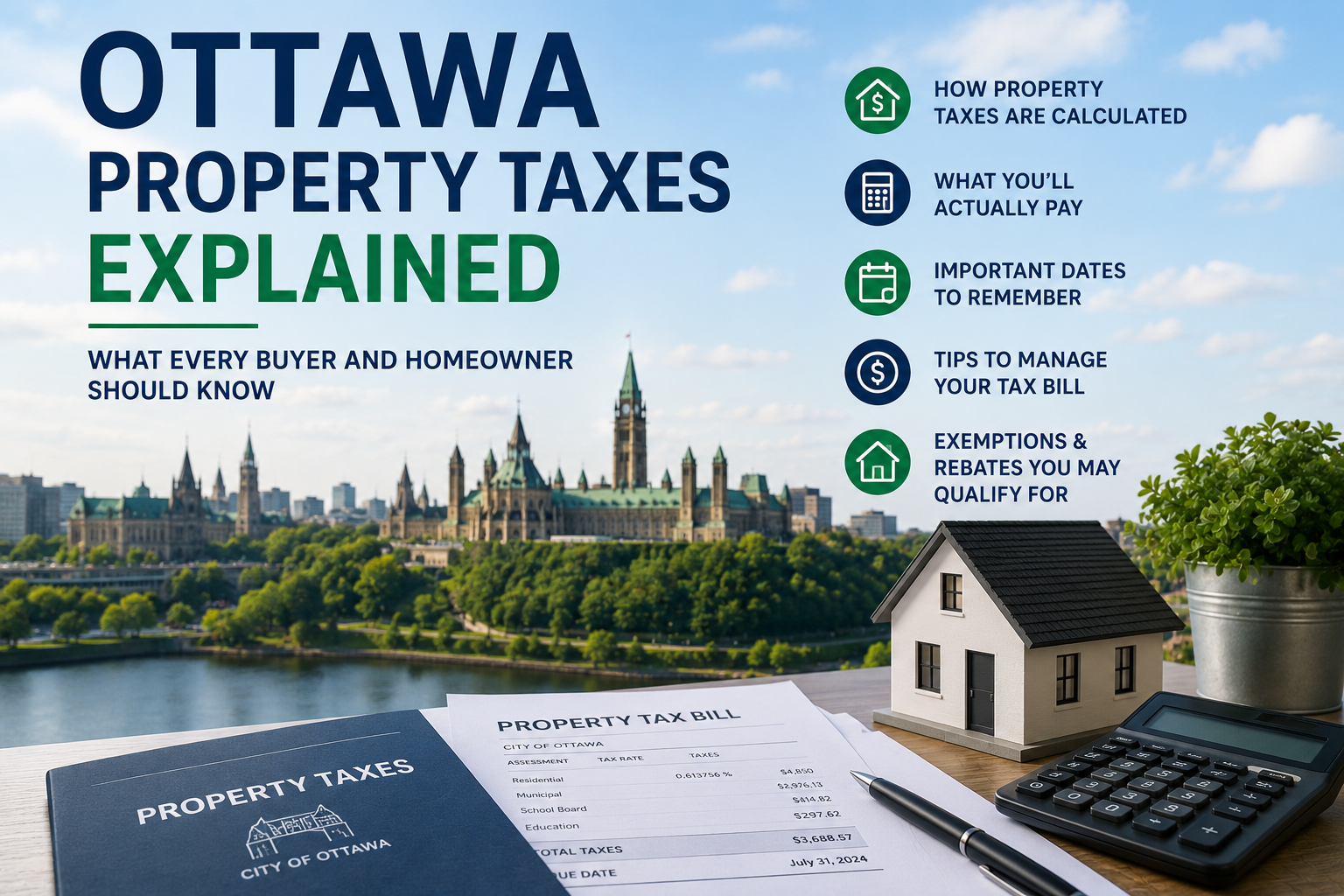
Buying a home in Ottawa involves much more than qualifying for a mortgage and saving for a down payment. One ongoing cost that every buyer and homeowner should understand is property tax.
Property taxes are a necessary part of homeownership, yet they are often overlooked until after a purchase has been completed. Understanding how property taxes work can help you create a realistic budget, compare homes more accurately, and avoid unexpected expenses after moving in.
Whether you’re buying your first home, upgrading to a larger property, or planning your long-term finances, knowing how Ottawa property taxes are calculated is an important part of making informed real estate decisions.
At the Anna Alemi Real Estate Team, we believe educated buyers make confident buyers. Here’s what every homeowner should know about property taxes in Ottawa.
What Are Property Taxes?
Property taxes are annual taxes paid by homeowners to the City of Ottawa. The revenue collected helps fund essential municipal services that residents use every day.
These services include:
- Road maintenance
- Snow removal
- Public transit
- Fire services
- Police services
- Parks and recreation
- Libraries
- Waste collection
- Community programs
- Infrastructure improvements
Every homeowner contributes based on the assessed value of their property.
How Are Ottawa Property Taxes Calculated?
Many buyers assume property taxes are based solely on the purchase price of a home.
That is not the case.
Property taxes are calculated using two main factors:
- The assessed value of your property.
- The annual tax rate established by the City of Ottawa.
The Municipal Property Assessment Corporation (MPAC) is responsible for determining your home’s assessed value. The City of Ottawa then applies its municipal tax rate to calculate the amount you owe.
Because tax rates can change from year to year, two homes with similar values may have different property taxes depending on location, property type, and municipal tax classifications.
What Is MPAC?
MPAC stands for the Municipal Property Assessment Corporation.
This independent organization assesses nearly every property in Ontario to estimate its value for taxation purposes.
MPAC considers several factors, including:
- Property size
- Lot dimensions
- Age of the home
- Construction quality
- Renovations and improvements
- Location
- Comparable property sales
It is important to understand that your MPAC assessment may not always match the current market value of your home.
A home’s selling price can be higher or lower than its assessed value depending on market conditions.
Why Property Taxes Matter When Buying a Home
When searching for homes, many buyers focus on the purchase price and monthly mortgage payment.
However, property taxes are part of your monthly housing costs and should always be included in your budget.
For example, two homes with similar purchase prices may have significantly different annual property taxes.
A home with lower taxes could reduce your monthly expenses, while higher taxes may affect your affordability over the long term.
Before making an offer, review the annual property tax amount and understand how it fits into your overall financial plan.
Do Property Taxes Increase Every Year?
Property taxes can change from year to year.
Several factors may influence your annual property tax bill, including:
- Changes to Ottawa’s municipal tax rate.
- Updated MPAC property assessments.
- Home additions or major renovations.
- Changes to municipal services and budgets.
While increases are not always significant, homeowners should plan for gradual changes over time as part of responsible budgeting.
Property Taxes for New Construction Homes
If you’re purchasing a newly built home, property taxes can sometimes be misunderstood.
During the first year, taxes may be estimated until MPAC completes its assessment.
Once the property has been fully assessed, homeowners may receive an adjustment that reflects the home’s actual assessed value.
This is one reason why buyers should work closely with their Realtor, lawyer, and mortgage professional when purchasing a new construction property.
Understanding these adjustments ahead of time can help avoid unexpected costs after closing.
Can You Appeal Your Property Assessment?
Yes.
If you believe your MPAC assessment does not accurately reflect your property’s value, you may request a review.
Homeowners can file a Request for Reconsideration through MPAC if they believe the assessment contains errors or does not fairly represent the property’s characteristics.
Before pursuing an appeal, it is helpful to understand how your assessment compares with similar homes in your neighbourhood.
An experienced Realtor can also provide valuable market insight when evaluating your property’s value.
Budgeting for Property Taxes
One of the easiest ways to prepare for homeownership is to include property taxes in your monthly budget from the beginning.
Consider budgeting for:
- Mortgage payments
- Property taxes
- Home insurance
- Utilities
- Maintenance and repairs
- Emergency savings
Looking at the complete financial picture helps buyers avoid becoming financially stretched after moving into their new home.
A well-planned budget makes homeownership much more enjoyable.
How the Anna Alemi Real Estate Team Helps Buyers Make Informed Decisions
Buying a home involves more than finding the right property.
It means understanding every cost associated with ownership so you can make confident, informed decisions.
The Anna Alemi Real Estate Team helps buyers evaluate homes based not only on price, but also on monthly affordability, neighbourhood amenities, resale potential, and ongoing ownership costs, including property taxes.
If you’re planning to buy a home in Ottawa, our team can help you compare properties, understand local market trends, and navigate every step of the buying process with confidence.
Be sure to explore our Featured Listings to see homes currently available across Ottawa. You can also visit our blog for more helpful resources, including The Complete Cost of Buying a Home in Ottawa, Biggest Mortgage Mistakes Home Buyers Make, How to Choose the Right Ottawa Neighbourhood Based on Schools, Thinking About Downsizing? Here’s What Ottawa Homeowners Should Know, and many other guides designed to help buyers and sellers make smarter real estate decisions.
Whether you’re purchasing your first home or your next investment, the Anna Alemi Real Estate Team is here to help you every step of the way.
Frequently Asked Questions
How are property taxes calculated in Ottawa?
Property taxes are calculated using your property’s assessed value, as determined by MPAC, along with the municipal tax rate set annually by the City of Ottawa.
Does the purchase price determine my property taxes?
No. Property taxes are based on the assessed value of the property rather than the amount you paid for the home.
Do property taxes increase every year?
Not necessarily, but they can change due to updates in municipal tax rates, MPAC assessments, renovations, or changes to city budgets.
Can I appeal my property’s assessed value?
Yes. If you believe your assessment is inaccurate, you can submit a Request for Reconsideration to MPAC for review.
Should property taxes be included in my home buying budget?
Absolutely. Property taxes are an ongoing cost of homeownership and should be included alongside your mortgage, insurance, utilities, and maintenance expenses.
Does a newly built home have different property taxes?
New construction homes may initially receive estimated tax bills until MPAC completes a full assessment. Buyers should be prepared for possible tax adjustments after the assessment is finalized.