

By Anna Alemi, Real Estate Broker | Updated November 18, 2026
Your home did not sell.
Does that automatically mean something is wrong with the property?
No.
But it does mean the market has given you information—and that information should be understood before you make the next decision.
Across Ottawa, homeowners are selling in a different environment than they experienced during the most aggressive seller markets of previous years.
Buyers generally have more choice.
They have more time to compare properties.
And they can be more selective about price, condition, presentation and location.
That makes one question particularly important:
Why did buyers choose another property instead of yours?
A home that has not sold is not necessarily a home that cannot sell.
Before automatically lowering the price, cancelling the listing or waiting until spring, diagnose what the market is actually rejecting.
The Short Answer: Why Isn’t My Ottawa Home Selling?
A home not selling in Ottawa usually has a mismatch somewhere between:
- price;
- presentation;
- competing inventory;
- buyer objections;
- showing accessibility; and
- the overall listing strategy.
Price may be the problem.
But it should not automatically be assumed to be the only problem.
If buyers are not clicking, the issue may be presentation or positioning.
If they are clicking but not booking showings, the perceived value may not be strong enough.
If they are showing up but not offering, the property itself—or the price relative to the property—may be creating friction.
If offers are arriving but transactions repeatedly fail, the problem may be in negotiation, terms or expectations.
Different symptoms require different solutions.
What Is Really Happening in Ottawa’s Housing Market?
The latest Ottawa Real Estate Board data shows why sellers need to be more precise.
In October 2026:
- 1,048 residential properties sold;
- sales were 10.7% below October 2025;
- 4,582 properties remained actively listed;
- active listings were 6.4% higher than a year earlier;
- months of inventory stood at 4.4;
- the sales-to-new-listings ratio was 44.0%;
- homes sold for an average of 97.5% of their listing price; and
- median time on market was 25.5 days.
According to the Ottawa Real Estate Board’s October 2026 market report, conditions continued to lean in buyers’ favour even though sales improved modestly from September.
The price picture also softened.
Ottawa’s average residential sale price was $678,512, down 4.5% year over year, while the MLS HPI composite benchmark was $616,900, down 1.3%.
What does that mean?
Buyers are still buying. But they have more ability to compare value before choosing a property.
That distinction is critical.
The market has not stopped.
Buyers have become more selective.
And conditions are far from uniform.
Single-family homes recorded approximately 4.0 months of inventory.
Townhouses recorded approximately 3.6 months.
Apartments were substantially softer at 7.4 months.
Geography also changed the picture. Ottawa Suburb East recorded 3.5 months of inventory, while Ottawa Centre recorded 6.6 months.
So your real market is not simply:
Ottawa.
It is:
Ottawa → neighbourhood → property type → price range → direct competition → individual property.
For additional market context, review Ottawa’s fall 2026 housing market and how inventory and buyer leverage evolved through September.
5 Reasons an Ottawa Home May Not Be Selling
1. The Asking Price Reflects Yesterday’s Market
One of the hardest adjustments for sellers is separating what a property might have achieved in a stronger market from what buyers are prepared to pay today.
Perhaps a similar property sold for more last year.
Perhaps you completed significant renovations.
Perhaps a neighbour originally listed at a particular price.
Or perhaps you have a specific amount you need from the sale.
All of those factors may matter personally.
They do not necessarily establish current market value.
Buyers compare your property against:
- current competing listings;
- recent comparable sales;
- condition;
- location;
- layout;
- updates;
- carrying costs; and
- everything else available within their budget.
If your asking price does not make sense within that comparison, buyers may simply choose another property.
A successful pricing strategy therefore needs to answer:
What can the buyer purchase instead?
Many listing problems begin before launch, which is why it is useful to understand the major seller mistakes to avoid before putting a home on the market.
2. Your Property Isn’t Standing Out Online
Most buyers begin evaluating your home before they ever walk through the door.
They see:
- the first photograph;
- thumbnail images;
- room presentation;
- listing copy;
- floor plans;
- property information; and
- the asking price
alongside competing listings.
Your home may be well maintained and still struggle to generate interest if the digital presentation does not make its value obvious.
Strong property marketing should answer:
Why should this buyer stop scrolling and look more closely at this home?
That may require:
- professional photography;
- improved staging;
- stronger image sequencing;
- better lighting;
- clearer property information;
- more persuasive listing copy; or
- a stronger story around how the home actually fits the target buyer.
Marketing is not simply putting a property online.
It is helping the right buyer understand why this property deserves to be chosen over the alternatives.
If the home needs to be relaunched, review how to prepare your home for sale in Ottawa before creating new photography and marketing.
3. Your Property Is Competing Against Better Alternatives
Imagine a buyer searching in Kanata, Barrhaven, Orléans or Stittsville.
Several comparable homes appear in the same search.
One has stronger photographs.
Another offers a better lot.
Another has been more recently updated.
One has a more functional floor plan.
Another is priced more aggressively.
The buyer does not evaluate your property in isolation.
They evaluate it against the alternatives.
The seller therefore needs a clear answer to:
Why should the buyer choose this one?
The answer may involve:
- location;
- lot;
- lifestyle;
- condition;
- layout;
- upgrades;
- flexibility;
- convenience; or
- value.
Without a compelling reason to choose it, a property can become another listing in the buyer’s comparison set.
In a market with more choice, understanding how Ottawa sellers can stay competitive as inventory rises becomes increasingly important.
4. Buyer Concerns Aren’t Being Diagnosed Properly
A listing can receive significant online activity and still generate few showings.
Or it can receive showings without producing offers.
Those are not the same problem.
If buyers are viewing the listing online but not booking appointments, investigate:
- price position;
- photography;
- presentation;
- property description; and
- how the home compares online.
If buyers are attending showings but repeatedly declining to offer, investigate:
- condition;
- layout;
- location objections;
- required repairs;
- condominium fees;
- carrying costs;
- competing properties; and
- value relative to the asking price.
The answer is not always a major renovation.
Sometimes the solution is better information.
Sometimes it is a minor repair.
Sometimes it is presentation.
Sometimes it is marketing.
And sometimes the evidence does point to price.
Understand the objection before choosing the solution.
5. There Is No Clear Plan for Responding to the Market
A listing should not operate on autopilot.
Before launch, the seller and representative should establish what will be reviewed if the market does not respond as expected.
Ask:
How much online engagement are we receiving?
How many showing requests are being generated?
What are buyers saying after showings?
What new competing properties have entered the market?
What comparable homes have sold?
Have competing sellers adjusted their prices?
Are offers being generated?
Each signal tells us something different.
Leaving a listing unchanged indefinitely and hoping a buyer eventually appears is not a complete strategy.
The Ottawa Home Sale RESET Approach
At the Anna Alemi Real Estate Group, a property that has not sold deserves a proper diagnosis before another major decision is made.
That is the purpose of the Ottawa Home Sale RESET Review.
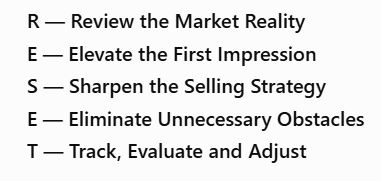
R — Review the Market Reality
We begin with the evidence.
That means examining:
- recent comparable sales;
- active competition;
- expired, cancelled or terminated listings where relevant;
- local inventory;
- absorption;
- property type;
- price range; and
- current buyer behaviour.
The goal is to understand how a real buyer is likely to compare your property with the alternatives.
E — Elevate the First Impression
Next, we examine what potential buyers actually see.
That includes:
- photography;
- staging;
- presentation;
- listing copy;
- image order;
- property information; and
- how clearly the strongest selling features are communicated.
The question is not simply:
“Does the listing look good?”
It is:
“Does it look more compelling than the competing options?”
S — Sharpen the Selling Strategy
Different homes require different positioning.
A downtown condominium should not be marketed like a suburban family home.
A rural property should not be positioned like a Stittsville townhome.
The strategy should identify:
- the most likely buyer;
- what matters most to that buyer;
- the property’s strongest advantages;
- the objections that need to be addressed; and
- why the property deserves attention at its price.
E — Eliminate Unnecessary Obstacles
Sometimes buyer friction is avoidable.
Examples can include:
- overly restrictive showing windows;
- incomplete property information;
- unanswered questions;
- minor visible maintenance concerns;
- unclear inclusions or exclusions; or
- information buyers need but cannot easily find.
Not every obstacle can—or should—be eliminated.
But avoidable friction should not make the property harder to choose.
T — Track, Evaluate and Adjust
Finally, the strategy must respond to evidence.
Track:
- showing activity;
- online engagement;
- buyer feedback;
- competing listings;
- new sales;
- price changes;
- market absorption; and
- the performance of previous marketing.
If the evidence identifies a pricing problem, address pricing.
If the evidence identifies presentation, positioning or accessibility instead, respond accordingly.
The purpose of RESET is not to avoid a necessary price reduction.
It is to make sure the next decision is based on evidence.
Should You Lower the Price of Your Ottawa Home?
Sometimes, yes.
A price adjustment may be appropriate when the evidence consistently shows that buyers do not see sufficient value at the current asking price.
But a price reduction should answer a strategic question:
What will this new price change about how buyers compare the property?
Reducing the price by an arbitrary amount simply to “do something” may not solve the problem.
Before making the change, review:
- recent comparable sales;
- current direct competition;
- showing volume;
- buyer feedback;
- days on market;
- competing price reductions;
- local absorption; and
- whether the new price moves the property into a more competitive search position.
The goal is not to protect the original asking price.
The goal is to determine the strongest realistic strategy from this point forward.
Should You Take Your Ottawa Home Off the Market and Relist?
Sometimes a genuine relaunch can help.
But cancelling a listing and reposting substantially the same strategy does not fix the underlying problem.
A meaningful relaunch should involve a reason.
That could include:
- revised pricing;
- new photography;
- improved staging;
- repairs;
- stronger property information;
- repositioned marketing;
- broader buyer targeting; or
- materially different timing.
Before cancelling or changing a listing arrangement, homeowners should also review the termination, expiry and holdover provisions in their seller representation agreement.
Your contractual obligations matter independently of the marketing strategy.
A relaunch should therefore represent:
a better strategy—not simply a newer listing date.
Should You Wait Until Spring 2027?
Possibly.
But spring is not automatically a solution.
Spring traditionally brings more real-estate activity.
It can also bring more competing listings.
The relevant comparison is not:
Fall = bad. Spring = good.
It is:
What specific problem would waiting until spring solve?
Waiting may make sense if:
- the property needs meaningful preparation;
- your personal timeline improves;
- the next move becomes easier;
- financial circumstances improve; or
- current local conditions make postponement strategically reasonable.
Selling sooner may make more sense if:
- you already need to move;
- carrying costs are significant;
- the next property is available now;
- your market segment is currently active; or
- the property can compete successfully after strategic changes.
There is no citywide answer.
Use your actual property and financial situation.
Frequently Asked Questions
Why isn’t my Ottawa home selling?
Common causes include an asking price that does not align with current alternatives, weak online presentation, stronger competing listings, unresolved buyer objections, restrictive showing conditions or a listing strategy that has not adjusted to buyer response.
Should I lower the price if my house is not selling?
Not automatically. First determine whether price is actually the problem. Review comparable sales, competition, showing activity, buyer feedback and local absorption. If buyers consistently reject the property’s value at its current asking price, a strategic price adjustment may be appropriate.
How long should I wait before reducing my home price?
There is no universal number of days. The decision should depend on expected activity for the specific neighbourhood, price range and property type, along with showing volume, feedback, new competition and recent sales.
Should I cancel my listing and relist?
A relaunch can help when meaningful changes are being made to price, presentation, condition or marketing. Simply reposting the same strategy does not necessarily improve the property’s competitive position. Review your seller representation agreement before making contractual changes.
Is Ottawa currently a buyer’s market?
October 2026 conditions continued to lean in buyers’ favour overall, but individual segments differed considerably. Single-family and townhouse inventory was materially tighter than apartment inventory, and different Ottawa submarkets also recorded very different supply levels.
Should I wait until spring 2027 to sell my Ottawa home?
Spring may produce more buyer activity, but it can also create more seller competition. The better question is whether waiting materially improves your property’s preparation, financial position, timing or local market opportunity.
Can a home still sell after an expired or unsuccessful listing?
Yes. An unsuccessful first listing does not automatically mean the property cannot sell. The important step is determining what prevented buyers from choosing it and making meaningful changes before the next launch.
My Advice to Ottawa Homeowners Whose Properties Haven’t Sold
I’ve worked in real estate since 2013, and one principle continues to hold:
Selling successfully requires more than exposure.
It requires:
- understanding buyers;
- interpreting market evidence;
- communicating value;
- positioning the property against its real competition; and
- adjusting when the evidence changes.
If your listing has expired, your property has been sitting without meaningful interest, or you are considering a major price reduction, do not make the next decision simply because something needs to change.
First determine what needs to change.
You deserve to understand the options before choosing one.
Your Next Move Starts With a Better Diagnosis
If your Ottawa home didn’t sell, let’s find out why.
Request a complimentary Ottawa Home Sale RESET Review with the Anna Alemi Real Estate Group.
We will review your property’s market position, competition, presentation, previous buyer response and practical next steps.
The objective is not simply to relist your property.
It is to make the next strategy better informed than the last one.
Call or text 613-900-0009 to request your RESET Review.
If you are still at the planning stage and primarily want to understand your current market value, you can also start with a Free Home Evaluation.
Anna Alemi
Real Estate Broker
Anna Alemi Real Estate Group
RE/MAX HALLMARK REALTY GROUP, Brokerage
Ottawa, Ontario
Market statistics are based on the Ottawa Real Estate Board’s October 2026 Market Report, published November 5, 2026. Market conditions vary by neighbourhood, property type and price range. No specific sale price, timing or result is guaranteed.